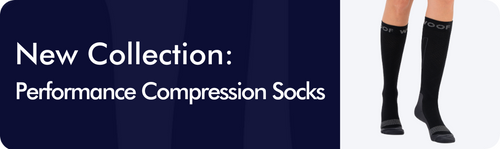


Our compression socks for pregnancy give your legs graduated support, firmest at the ankle and easing off up the calf. That’s where you need it when your feet puff up by mid-afternoon and your legs feel twice as heavy as at breakfast.
Every pair of our maternity compression socks is knee-high, 15-20 mmHg and made from a soft rayon-from-bamboo blend. Wide calf comes on nearly every style, Extra Wide on selected styles, all in prints you’ll want to wear.
Why Your Legs Swell During Pregnancy
Your body carries a lot more blood and fluid while you’re pregnant, and your growing uterus presses on the large veins that bring blood back up from your legs. Pregnancy hormones relax your vein walls too, so fluid settles in your feet and ankles. That swelling is called edema.
It usually builds through the day and peaks in the third trimester, often with heavy, achy legs and leg cramps along for the ride.
Varicose and spider veins are common in pregnancy too. Compression can help with the ache and heaviness, though it hasn’t been shown to stop the veins forming. Our guide to compression socks for varicose veins covers the evidence.
How Maternity Compression Socks Help
Graduated pressure is firmest at your ankle and lighter toward your knee, which helps push blood back up toward your heart and keeps less fluid pooling around your ankles. Pregnancy compression socks can mean:
- Less puffiness in your feet and ankles by the end of the day
- Legs that feel lighter after hours of standing or sitting
- Support for tired, achy calves
- More comfort on long drives and flights
For more on compression socks for pregnancy swelling, see our post on compression socks for swelling.
What Compression Level Is Best for Pregnancy?
The mmHg number tells you how firmly a sock presses at the ankle.
- Mild (8-15 mmHg): light support for legs that feel a bit tired
- Moderate (15-20 mmHg): everyday wear and mild to moderate swelling
- Firm (20-30 mmHg): more severe swelling or varicose veins, usually on your doctor’s or midwife’s advice
Every pair we make is 15-20 mmHg graduated compression. If your doctor or midwife has told you to wear 20-30, follow their lead. Our mmHg levels explainer walks through each number.
They should feel snug, like a firm hug around your ankle. Pain, numbness or tingling means the pair is too tight or the wrong size.
When to Start Wearing Compression Socks in Pregnancy
Plenty of people start in the second trimester, when swelling first shows up, and wear them most days through the third. If you’re on your feet all shift or have a long trip coming up, start earlier.
Pull them on first thing in the morning, before your ankles swell, and take them off before bed. You don’t need compression socks during pregnancy overnight. More on how long to wear compression socks each day.
Pregnant on Your Feet All Day
We’re a family of vets, so we know what a 12-hour shift on a hard floor does to your legs. Add a pregnancy and swelling builds even faster, whether you’re a vet, vet nurse, nurse, teacher or working a shop floor.
Knee-high socks sit neatly under scrubs. The bamboo blend wicks sweat and dries fast, handy when pregnancy has you running warm, and the extra-thick heel and toe help protect against blisters. Nurses can find more pairs in our compression socks for nurses.
For long flights and road trips, browse our travel compression socks and our tips on compression socks for flying while pregnant.
Finding Your Fit as Your Body Changes
Your calves change shape as your pregnancy goes on. Measure the widest part of your calf in the morning, then match it with your shoe size on our compression socks sizing chart. Re-measure each trimester, and size up if you land between sizes.
If your calves have grown, nearly all our pregnancy compression socks come in Wide, or shop the full range of wide calf compression socks. Our step-by-step measuring guide and our post on how tight compression socks should be cover the rest.
How to Put On Compression Socks Over a Bump
- Sit down somewhere steady, and recruit a partner in the third trimester.
- Reach inside the sock and turn it inside out down to the heel.
- Slide your foot in until your heel sits in the heel pocket.
- Roll the sock up over your ankle and calf a little at a time.
- Smooth out wrinkles so the cuff sits below your knee.
Soft Bamboo Socks with Prints You’ll Love
Our bamboo compression socks are gentle on sensitive skin, resist odor and have no seams up the leg, so they work as everyday pregnancy socks at work, at home and on the road.
For your first pairs, try florals like Pick a Posy, Pressed Flowers or Backyard Blooms, or keep it simple with black, white or baby pink. Grab two or three so a clean pair is always ready each morning.
Compression Socks for Pregnancy FAQs
Are compression socks safe during pregnancy?
Maternity compression stockings and socks at 15-20 mmHg are a common everyday choice. Check with your doctor or midwife first if you have circulation problems, a history of blood clots or a skin condition on your legs.
Can I sleep in compression socks while pregnant?
You don’t need to. Lying down takes gravity out of the equation, so take them off before bed.
Can I wear compression socks postpartum?
Yes. Swelling can hang around for the first few weeks after birth, and many people keep wearing their compression socks through it.
When should I call my doctor about swelling?
Call straight away if one leg swells more than the other, a leg turns red, warm or painful, or your face or hands swell suddenly.
Read more ↓